When I decided to write this post, I did a quick google search to see what is available. It was really embarrassing. Almost all the advice being given for this was from websites that earn a commission if you click on link of the running shoes to buy them. Most of the shoes being recommended would not help you at all if you had bunions.
There is plenty of good information on bunions online, so there is no point litigating what they are and what causes them here, except to say that the only way to get rid of them is with surgery and the best you can do to prevent them getting worse or being so painful is to get the shoe fitting correct.
The running shoes that are best if you have bunions are those that are wider in the forefoot to accommodate the enlarged joint. Your typical running shoe made on a wider last is often not wide enough (though you will read commonly that they are from those who make money selling those shoes). You could try on the wider last models of each of the brands to see how they feel on you. In all honestly, there is only one brand that is any good here and they are the Altra running shoes. They are massively wide in the forefoot compared to other brands and they have the width to accommodate the enlarged joint associated with the bunion. If you have a bunion, then try a pair.
What else could you do for bunions?
Apart from surgery, there are other options. What is important is to keep the joint mobile and flexible with exercises as it does have a tendency to become stiffer. A bunion corrector can also be used to help with that. If you can not get the shoes right, then there are donut shaped pads that can be worn to keep the pressure off the joint.
Advertisement:
No products found.
I get commissions for purchases made through links on this website. As an Amazon Associate I earn from qualifying purchases.
· Latest addition to the popular BLAST BEYOND™ series offers outstanding performance and protection alongside a faster, lighter, bouncier ride
· With more people running than ever before [1] , ASICS newest addition to the BLAST BEYOND™ series helps put a spring in the step of a new generation of runners.
[28th August 2020 – KOBE, JAPAN] – The DYNABLAST™ is a performance shoe offering runners a faster, lighter, bouncier ride. Based on ASICS’ trademark human-centric design, it is made for anyone looking to add some fun to their run and put an extra spring in their step.
The launch of the DYNABLAST™ comes at a time when more people than ever are falling in love with running. Inspired by the need to escape the challenges of life during the ongoing COVID-19 pandemic, more people are clocking up more strides, more often. Fitness-tracking app, ASICS Runkeeper™, continues to see increases with users – with a 113% increase in registrations globally year to date vs the same time period in 2019, while, according to ASICS’ own research [i] in 12 countries, 73% of runners globally now say exercise is something they look forward to during the week. With 66%, saying that running is the best form of physical exercise that they can do right now.
Following on from the successful launch of the NOVABLAST™ running shoe, ASICS have answered the call of runners, by adding another shoe to the range, the DYNABLAST™. As the latest addition, the DYNABLAST™ features FLYTEFOAM™ Blast technology in
in the midsole for a lightweight, responsive feel. Underfoot cut-outs in the outsole also work with the midsole foam to put extra bounce into every stride. With its fast, bouncy, energetic feel, the DYNABLAST™ is a recommended shoe for a new generation of runners who look forward to their runs as a fun, uplifting experience.
Elsewhere, an engineered mesh upper increases breathability and creates a “barely there” feel, while the knit upper provides a comfortable fit and outstanding support without the bulkiness of stitched or welded overlays.
Kenichi Harano,Executive Officer and Senior General Manager at ASICS Institute of Sport Science, said: “ASICS was founded on a mission to help everyone achieve a sound body in a sound body through movement. With people increasingly using running to alleviate the pressures of life right now, that mission has never been more important. We’re committed to meeting runners’ changing needs both during this pandemic and beyond. The DYNABLAST™ is one of the many ways we are delivering the experiences and products we know runners want, helping the world keep on running.”
As well as improving and introducing new shoes that aim to elevate the running experience, ASICS have designed an app that turns the rhythm of a run into a track in real-time called the ASICS Run Mixer. The app works best with the ASICS BLAST family range of shoes and enhances the joy and fun of running by creating bespoke track based on a runners very own running rhythm. The rhythms generated can be shared and runners can challenge one another to produce something even better. Runners can download the app for free from the App Store or Google Play.
ASICS DYNABLAST™ will be available globally for men and women from ASICS retail, online stores and specialist running outlets from 28 August 2020 at an RRP of $100. Visit www.ASICS.com and video [ASICS DYNABLAST™ ] for more information.
Advertisement:
No products found.
I get commissions for purchases made through links on this website. As an Amazon Associate I earn from qualifying purchases.
Anterior compartment syndrome or chronic exertional compartment syndrome is a problem with the muscle on the front of the leg (the anterior tibial muscle or tibialis anterior muscle) trying to expand during exercise when the fascia around the muscle is too tight and the muscle can not expand. This can become painful and is one of the causes of that term, “shin splints”.
The treatment options in the past were often limited and a surgical release of the tight fascia around the muscle was usually the better definitive treatment.
However, we now have this study on anterior compartment syndrome that shows it is good option to change from heel striking to forefoot striking to help this condition. From all reports it works pretty well and the rationale for it is sound. While this might be a good idea for anterior compartment syndrome, it would not be a good idea for other types of running injuries such as achilles tendon issues. The transition from rearfoot or heel striking to a midfoot or forefoot strike pattern needs to be slow to allow for the tissues to adapt to the loads.
What running shoes should be used for anterior compartment syndrome?
There is no specific shoes for runners with anterior compartment syndrome. There will be many personal preferences here, but it comes down to does the shoe allow or facilitate forefoot striking? A lower drop shoe will help with that. Less cushioning under the heel will help do that. The type or model of shoe is not particularly important in this case, its the running technique and the touch down angle that is important. That can be achieved in any type of running shoe.
Advertisement:
No products found.
I get commissions for purchases made through links on this website. As an Amazon Associate I earn from qualifying purchases.
The list has been compiled following introduction of the requirement on 31 January 2020 that any new shoe that an athlete proposes to wear in international competitions needed to be assessed by World Athletics.
The list does not contain every shoe ever worn by an athlete but it does include some older models of shoes that manufacturers sent to World Athletics for assessment by its independent expert. The position with older shoes that are not on the list is that they still need to comply with the rule going forward. The athlete, or their representative, will need to ensure their older shoe complies with Rule 5.13 in terms of the maximum sole thicknesses for their specified event and any inserted plate or blade, including spike plates if relevant.
Under Rule 5 of the Technical Rules, athletes (or their representative) have the responsibility to provide World Athletics with specifications of the new shoes the athlete proposes to wear in competition. World Athletics accepts shoe specification and samples submitted by manufacturers for further examination.
If there is doubt about a shoe (particularly shoes that no other athlete has) then athletes, officials and meeting organisers should first refer to the approved list.
If the competition referee has a reasonable suspicion that a shoe worn by an athlete might not comply with the rules then at the conclusion of the competition the referee may request the shoe be handed over for further investigation by World Athletics.
The list of approved shoes will be updated regularly to reflect any new information received.
“Transitioning rules is never easy but is significantly harder with the current pandemic and the challenges we all face in staging, competing and providing kit and equipment during this time. We will continue to communicate, clarify and explain the rules and would like to thank our athletes, Member Federations, meeting organisers, shoe companies and technical officials for working with us to ensure the rules are understood and adhered to and, when this is not possible, that we resolve issues quickly, consistently and compassionately within the framework of the rules,” said World Athletics CEO, Jon Ridgeon.
Advertisement:
No products found.
I get commissions for purchases made through links on this website. As an Amazon Associate I earn from qualifying purchases.
MIZUNO ENERZY was created with the purpose of improving the performance benefits of Mizuno footwear through new advanced materials, delivering greater rebound and increased softness. Athletes will now be able to retain more of the energy they put in without sacrificing on overall comfort. “We recognize not only what athletes want, but also require in their training – no matter their sport. We know performance, energy return and comfort are all equally important, so we are constantly engineering new technologies aided to support this,” said Tomohiro Ota, Chief Marketing Officer, Mizuno USA. “This is why, as a brand, we work extremely hard to constantly create high-quality sports gear and remain dedicated to finding new ways to enhance athlete’s capabilities by staying at the forefront of sports innovation to deliver the most premium performance materials in the market.” Athletes will be able to experience the difference MIZUNO ENERZY offers in two different iterations, MIZUNO ENERZY(FOAM) and MIZUNO ENERZY CORE. Each iteration has been engineered to provide athletes with enhanced performance capabilities through the unique features offered in the form of its versatility to change shape and increased rebound potential. MIZUNO ENERZY will be used in footwear products across multiple Mizuno sporting categories. The first introduction of MIZUNO ENERZY will be available in July 2020 in “THE MIZUNO ENERZY” signature shoe, which will provide the softest cushion and highest energy return ratio in Mizuno history. “THE MIZUNO ENERZY” will be available to purchase on July 1st in a limited quantity of three hundred pairs at www.MizunoUSA.com.
Advertisement:
No products found.
I get commissions for purchases made through links on this website. As an Amazon Associate I earn from qualifying purchases.
PHILADELPHIA – Running is one of the most popular forms of exercise, enjoyed by a broad range of age groups and skill levels. More women are running recreationally compared to men; specifically 54% of runners are female as indicated by a 2018 National Runner Survey. Women, however, are at least twice as likely as men to develop stress fractures, an injury that impacts around 20% of runners. However, information is still lacking on how to best prevent and treat stress fractures in women. New pilot research from Jefferson suggests physiological factors that could be included in routine screening for stress fracture risk, as well as changes in training approach to aid in prevention.
The researchers examined physiological differences that might contribute to increased risk of stress fractures in a study published in Sports Healthand also surveyed women’s perception of risk and behaviors that contribute to stress fractures in a separate study published in Physical Therapy in Sport.
“Most of the literature focuses on elite runners or athletes,” says Therese Johnston, PT, PhD, MBA, Professor in the Department of Physical Therapy and first author of both studies. “It was important for us to capture the regular or average female runner in these studies, and the main goal was to see how we can prevent a first or subsequent fracture.”
Both studies surveyed the same group of 40 female recreational runners, age 18-65 years. 20 women had a history of running-related stress fractures, and they were matched according to age and running abilities with 20 women with no history of stress fractures. The two studies aimed to assess what contributed to risk of stress fractures, from the physiological, such as – bone structure and density, muscle mass, hormonal status, to ones influenced by training routine, such as training intensity, nutrition, insufficient strengthening, and ignoring pain.
“This mixed methods approach provides a richer context and a more detailed picture of the practices and risks that contribute to stress fractures in every-day women runners,” says Jeremy Close, MD, associate professor in family and sports medicine and one of the lead authors on the research. “It also tells us how perceived risk informs physiological risk.”
For the study focused on physiological factors, the subjects underwent a comprehensive blood panel that examined levels of hormones like estradiol and testosterone, vitamins and minerals important for bone health such as vitamin D and calcium, and bone markers. They also underwent dual energy x-ray absorptiometry (DXA) to test for bone mineral density. The researchers found that while there was no difference in estradiol hormone levels between the two groups, women who had a stress fracture history reported menstrual changes or irregular periods as a result of their training, or during peak training times. The blood panel also examined markers for bone formation and resorption, and pointed to increased bone turnover in the group of women with stress fractures. They also found through the DXA testing that women with a history of stress fractures had lower hip bone mineral density compared to women with no history of stress fractures, indicating decreased bone strength that could increase risk of injury.
“DXA for bone density and blood testing for bone markers are not routinely performed in this population – they are usually reserved for post-menopausal women – so we may be missing important clinical indicators for stress fractures in these women,” says Dr. Johnston. “While the link between menstrual changes and bone strength is unclear, our findings also indicate that asking female runners about any menstrual irregularities during heavier training times is important during routine screening.”
For the study investigating women’s self-perception of risk, interviews were conducted with the goals of finding out which factors women thought were associated with stress fractures or maintaining bone health while running. Several themes emerged from these interviews. Specifically, compared to women without stress fractures, women with histories of stress fractures had increased their training load more quickly. Also, while they knew of the importance of nutrition and strengthening exercises, women with a history of stress fracture more often reported not having or making the time for a balanced diet and proper cross-training to complement their running regimen.
Finally, women in this group reported pushing through the pain and running despite an injury more often than those without stress fracture. “In the interviews, it sounded like these women had trouble knowing which pain was normal, and which pain was abnormal. They also reported not always receiving appropriate guidance from healthcare providers on how to progress running safely,” says Dr. Johnston.
“It is clear that there needs to be more guidance from healthcare providers for woman runners on how to prevent stress fractures” says Dr. Close. “It can be very frustrating for these women who are on a path to wellness, but are impeded by an injury that can take several months to heal. If they don’t have the proper guidance on how to return to running safely, they risk a second injury.”
“We hope that our findings will encourage more thorough and routine screening in women runners for bone density and strength,” says Dr. Johnston, “as well as a comprehensive education plan on how to balance running with cross-training, and how to interpret pain cues from the body, to help women differentiate between normal aches and pains and indicators of a serious injury.”
Dr. Johnston plans to continue this research by studying women with acute stress fractures as they start running again, in order to identify factors related to successful or unsuccessful return to running following a stress fracture. The study will include Dr. Close as well as Marc Harwood, MD, service chief in the department of non-operative sports medicine at Rothman Orthopaedic Institute.
The work was funded by the Thomas Jefferson University Office of the Provost. The authors report no conflict of interest
Advertisement:
No products found.
I get commissions for purchases made through links on this website. As an Amazon Associate I earn from qualifying purchases.
The Seal of Acceptance Further Establishes the Brand as a Leader and Innovator in the Footwear Industry
Press Release:
BRAINTREE, Mass., Aug. 11, 2020 /PRNewswire/ — OOFOS, the global leader in recovery footwear, announces today its full line of products has earned the American Podiatric Medical Association (APMA) Seal of Acceptance, further solidifying them as a pioneer and leader within the recovery footwear category.
The APMA Seal of Acceptance Program recognizes products that have been found to be beneficial to foot health and of significant value when used consistently in a daily foot care program. OOFOS’ full collection is among these products, as all OOFOS styles were found by the committee to promote good foot health, further establishing the therapeutic and health benefits of the brand’s shoes. In receiving the Seal of Acceptance from the APMA, customers and physicians alike are assured that upon purchasing a pair of shoes from OOFOS, they are receiving a product that is of exceptional quality and is manufactured with the consumer’s comfort and well-being in mind.
“This is a huge moment for our brand. It reinforces prior research findings and the benefits of our unique foam technology, which is designed specifically for relief and recovery,” says Steve Gallo, President of OOFOS. “Our mission at OOFOS has always been ‘to make yOO feel better’ and this seal of acceptance by the APMA provides expert validation that our shoes make a difference in the health and wellbeing of our customers day in and day out.”
Made with proprietary OOfoam® technology, OOFOS shoes absorb 37% more impact than traditional foam footwear materials for the perfect blend of cushion and stability, based on a 2018 University of Virginia laboratory study.
The use of the proprietary technology in conjunction with their patented footbed allows the shoes to cradle and support the foot’s arches for more even distribution of pressure across the sole of the foot. The combination has also shown to reduce energy exertion in the ankles by up to 47% when compared to traditional footwear. The APMA committee has further championed this technology through review of the research the brand has done on these footwear components, how the products interact with the human body and the benefits consumers receive compared to traditional footwear.
This seal is just the latest example of how OOFOS is helping yOO recover and feel better with every step. In addition to the APMA Seal of Acceptance, thousands of consumer reviews online rave about the footwear’s positive impact on their lives, including relief of pain due to ailments, bringing comfort to long working hours and maintaining body health for professional athletes.
“These are the most comfortable slides I’ve ever worn in my life,” says OOFOS brand partner and Pro-Football Hall of Famer, Deion Sanders. This is coming from a dude who is 52, has had three toe surgeries, and is in need of a 4th, these shoes changed the game for me!”
About OOFOS OOFOS is the global leader in recovery footwear, founded by a team of industry veterans looking to help runners and fitness enthusiasts recover better from their workouts. Made with revolutionary OOfoam™ technology, OOFOS are designed to absorb 37% more impact than traditional footwear. They reduce stress on joints to keep anyone, of any activity level, feeling their best. From professional athletes to casual walkers, OOFOS footwear will make your hard-working feet and body feel better – all you have to do is feel the OO.
Advertisement:
No products found.
I get commissions for purchases made through links on this website. As an Amazon Associate I earn from qualifying purchases.
adidasRunning today unveils the adidas Ultraboost 19, an entirely reimagined and redesigned version of the brand’s iconic leading performance running shoe. adidas designers and product developers worked with thousands of runners from around the world to create the new silhouette, in what was its most ambitious collaboration project ever. The overwhelming feedback from runners was that running is changing, becoming younger and more democratic. With the emergence of city running clubs and fun runs, running is now a sociable sport rather than just something people do on their own. Runners made it clear they wanted a simpler product with fewer pieces but equally high performance. To reflect that, the original adidas Ultraboost was deconstructed and reconstructed from 17 pieces to focus on four key components – Optimized BOOST, Torsion Spring, Primeknit 360 and 3D Heel Frame.
Optimized BOOST –with 20% more BOOST in the midsole compared to the first-generation adidas Ultraboost, this updated technology brings even more energy return
Torsion Spring –a lightweight construction for enhanced support on landing and a snappy transition to propel runners forward
Primeknit 360 –feels like a second skin, combining pure comfort with lightweight performance
Updated 3D Heel Frame –a stripped-back design cradles the heel, bringing the perfect mix of adaptability and support
Advertisement:
No products found.
I get commissions for purchases made through links on this website. As an Amazon Associate I earn from qualifying purchases.
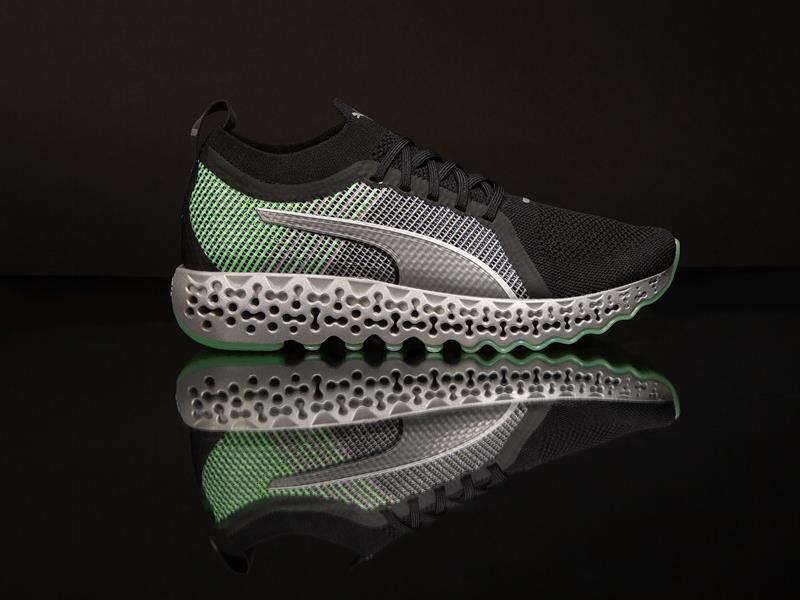
Global sports brand PUMA, as part of a sponsored research collaboration with MIT Design Lab, has created XETIC, a cushioning technology, which will start a new era by combining the worlds of mechanical cushioning and foam. This ultramodern performance innovation will provide for an excellent comfort for walking and will be first introduced in a new street-ready sneaker called Calibrate Runner.
While the futuristic visible technology of XETIC may look like 3D printing at first, XETIC is not made of plastic, it is foam. XETIC takes its name from “auxetic materials”, structures, which behave in a certain way when they are subjected to mechanical stresses such as compression. For XETIC, this means the cushioning provides an excellent comfort for all wearing occasions.
“PUMA’s innovation department teamed up with MIT Design Lab because we needed their highexpert engineering capabilities,” said Romain Girard, Senior Head of Innovation at PUMA. “MIT has computer simulation possibilities, which enabled us to see the behavior of the material and quickly find the optimal structure for calculated cushioning.”
PUMA and MIT Design Lab worked with an extensive runner community to analyze individual running specifics, such as pressure points, and they then took the data to develop a specifically shaped structure that allows for progressive cushioning. The result was a structure shaped like the horizontal number 8, which is characteristic for the XETIC.
The whole team was delighted with the ability to work on a project that allowed them to explore such a new space and to see all the efforts culminating in the creation of the Calibrate Runner. Over the course of the project qualitative and quantitative user testing was used, a novel finite element analysis simulation, and parametric design to find the perfect pattern, which was named ‘Recurve’.
With its visible XETIC technology, Calibrate Runner has a unique futuristic aesthetic, which will appeal to the techiest of streetwear collectors, while giving athletes access to a new era of cushioning. Straight from the lab, into the future.
A perfect blend of technology, comfort and performance is offered by PUMA x Porsche Design models Xetic M, Xetic L and Xetic M Shift. These models are well rounded delivering maximum performance and luxury in every situation. State of the art fabrics featuring 100% recycle mesh and chrome free leather including a Bloom sockliner imbue the shoes with a special and exclusive look.
Advertisement:
No products found.
I get commissions for purchases made through links on this website. As an Amazon Associate I earn from qualifying purchases.
The ASICS RUNNERS FACE COVER has been designed by the ASICS Institute of Sport Science (ISS) specifically for runners with performance, comfort, and protection at the core of the design
● The face cover employs cutting-edge design features and pioneering technology that give runners space to breathe with comfort so they can perform at their best
● The face cover has been designed in direct response to major concerns about how to run safely as lockdown eases, with ongoing global research [1] by ASICS revealing that 66% globally of regular exercises avoid certain routes or spaces to maintain social distance with others
[29 JULY 2020 – KOBE, JAPAN] – Today, ASICS is excited to announce a revolutionary face cover for runners – the ASICS RUNNERS FACE COVER.
Created specifically for runners by world-renowned scientists, engineers and designers at the ASICS Institute of Sport Science (ISS), the face cover pairs cutting-edge design with innovative air vents that give runners the room to breathe comfortably, while preventing the spread of droplets. The face covers quick-drying material helps cool the air that reaches its interior.
Together the unique, innovative design and cutting-edge materials allow runners of all levels to exercise without compromising performance or protection. Tests [2] show that the ASICS RUNNERS FACE COVER significantly improves breathability and comfort with runners feeling little to almost no difference from wearing no mask. Importantly, this is maintained even when running at higher speed where conventional masks inhibit performance.
Kenichi Harano, Executive Officer and Senior General Manager at the ISS said: “We know how important it is for runners to protect themselves and others when running, but also that many find face covers uncomfortable and restrictive. So, we created the ASICS RUNNERS FACE COVER, uniquely designed for runners with cutting-edge technology. The innovative design gives runners room to breathe comfortably while performing at their physical peak.”
The new ASICS RUNNERS FACE COVER will be available to runners globally from mid-September at a retail price of 40 USD. To find out more about the ASICS RUNNERS FACE COVER and register your interest for when this product is available, please visit ASICS RUNNERS FACE COVER .
A pioneering approach to design
The ASICS RUNNERS FACE COVER is not like any other sports accessory on the market. Yasuhito Hirota, President & Chief Operating Officer, ASICS, says: “When I used to run with a normal mask it was hard to breathe, but with this mask I was able to run very comfortably”. While other approaches rely solely on the breathability of materials, the ASICS RUNNERS FACE COVER combines this with an innovative design that gives runners the space to breathe comfortably within the face cover. This groundbreaking approach means that runners of every level can strive for their best performance with the confidence that they are staying protected.
Scientists at the ISS have responded to the unique needs of runners with a series of technologies and design features including:
● Interior Space
The unique curved structure creates more room inside the face cover to allow for easier breathing when running.
● Strategically Placed Air Vents
Air vents innovatively placed on the face cover provide unobstructed airflow while preventing the spread of droplets.
● Quick-drying, Washable Fabric
Cutting-edge material cools the air flowing into the mouth, improving breathability and comfort. The water repellent, washable fabric makes cleaning easier.
● Comfort Fit
Specifically designed to accommodate a wide range of faces with an adjustable cord to ensure fit– helping prevent fog build-up when wearing glasses.
● Sustainable Design
Produced with approximately 31% recycled materials.
ASICS continues to listen to runners of all levels to keep them motivated and protected in a world coming out of lockdown
With the ASICS RUNNERS FACE COVER, ASICS is continuing to listen to runners needs at this time. Ongoing research conducted by ASICS shows that globally, 7 in 10 (68% globally) people are more driven than ever to return to their physical peak.
However, 8 in 10 (79% globally) of regular exercisers we surveyed said wearing a face cover when running is not a comfortable experience because it is hard to breathe and irritates the skin. The ASICS RUNNERS FACE COVER is designed specifically to address the need for a face cover while running that offers comfort as well as performance and protection, with 5 in 10 runners (53% globally) saying they would feel more comfortable about their safety wearing a face cover while exercising.
Yasuhito Hirota further explains: “At ASICS, listening to our runners and understanding their changing needs lies at the heart of everything we do. There is lots more we can learn from the running community as lockdown eases across the globe, and we will continue to evolve our products and services to meet their future needs.”
Get Involved
For expert advice, training plans and more information about how to run, people can follow #RunToFeel or visit asics.com.
To find out more about the ASICS RUNNERS FACE COVER and register your interest for when this product is available, please visit ASICS RUNNERS FACE COVER.
HELPING THE WORLD RUN
ASICS is helping the world maintain its newfound love of running through a series of initiatives aimed at helping people continue to stay safe and motivated in a world coming out of lockdown. These include:
● Offering free access to the ASICS Studio™ at-home workout app for everyone through to the end of August 2020
● Highlighting running in people’s lives by calling on them to share how they stay motivated via #RunToFeel
● Providing additional training content and guidance from ASICS FrontRunner community and athletes
We consider the health and wellbeing of our athletes, customers and staff as our top priority, and we took the decision months ago to close our retail stores and offices in affected markets around the world. Medical professionals say that in the current situation movement is very important to ensure everybody’s mental and physical wellbeing. We believe in the power of sport to uplift us all, and in times like this it has never been as important to help everyone achieve a sound mind in a sound body. We will continue to do all we can to help the world achieve that goal.
[1] ASICS 2020 Pulse Survey: a live study of 1,250 regular exercisers in total across five markets that explores how people are feeling about returning to fitness and their current safety concerns/challenges. Conducted by Edelman Intelligence
[2] Tests conducted at ASICS Institute of Sport Science in Kobe, July 2020 compared ASICS Runner Face Cover with Conventional Non-Woven masks. Results demonstrate improved breathability and comfort at speeds both above and below AT (anaerobic threshold) using the perception scale.
Advertisement:
No products found.
I get commissions for purchases made through links on this website. As an Amazon Associate I earn from qualifying purchases.